Drivetrain Components Restored to Dependable Operation
Engine, Transmission & Differentials Repair in Texarkana for unusual noises, fluid leaks, or shifting concerns
A transmission slipping between gears during acceleration or a differential whining under load signals internal component wear that affects power delivery from the engine to the wheels. Technicians at 3DD Automotive diagnose drivetrain problems by testing engine performance parameters, evaluating transmission shift quality, inspecting differential operation, and identifying fluid leaks that indicate seal failures or component damage. These major mechanical systems generate specific failure patterns—metallic debris in transmission fluid points to clutch or gear wear, engine misfires create distinct exhaust odors and performance losses, and differential bearing noise changes frequency with vehicle speed in predictable ways.
Drivetrain diagnostics begin with thorough inspections that measure fluid condition, check for abnormal noises during operation, test electronic control systems, and evaluate mechanical component function under load. Technicians retrieve diagnostic codes from engine and transmission computers, perform compression tests to assess cylinder sealing, inspect clutch operation and gear engagement, and measure differential bearing preload to isolate specific components requiring repair or replacement.
Schedule a drivetrain inspection to determine what internal components are causing performance changes or operational concerns.
What Drivetrain Repairs Actually Involve
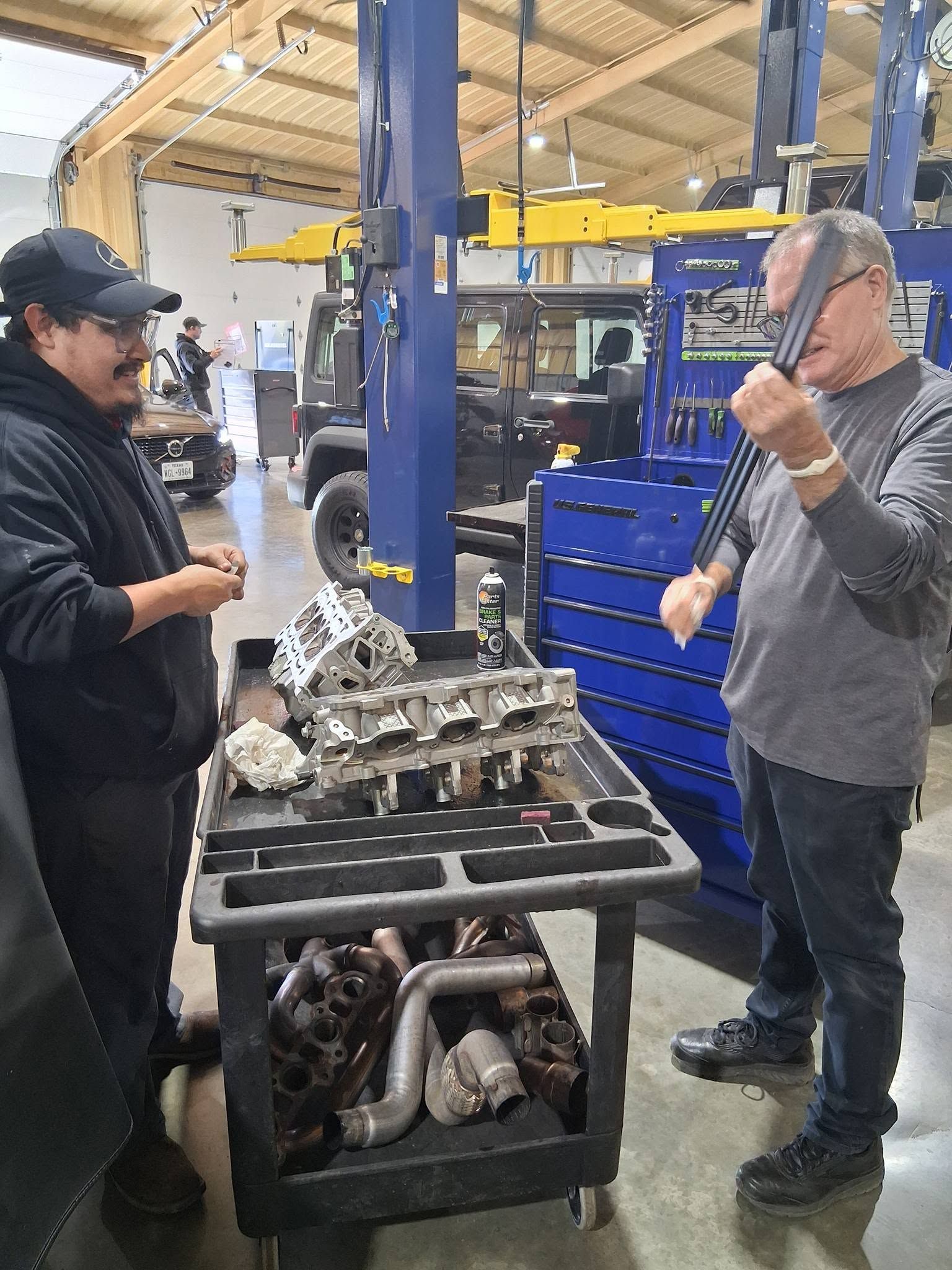
Engines convert fuel into rotational force through precisely timed combustion events, transmissions multiply that torque and deliver it at varying ratios to match vehicle speed and load, while differentials split power between drive wheels and allow them to rotate at different speeds during turns. When engine cylinders lose compression from worn rings or valve sealing problems, combustion efficiency drops and power output falls below specification. Transmission clutches wear thin from repeated engagement cycles, creating slip that prevents full power transfer between engine and wheels. Differential bearings develop play from continuous loading, generating noise and allowing gear mesh patterns to shift out of optimal alignment.
After drivetrain repairs, engines idle smoothly without misfires or hesitation, acceleration becomes linear and responsive because transmissions hold each gear firmly without slipping, and differential noise disappears because bearing preload and gear mesh return to factory specifications. Fluid leaks stop completely because replacement seals maintain pressure boundaries that keep lubricants inside housings where they protect moving parts. Shifting quality improves noticeably because transmission hydraulics operate within pressure specifications and clutches engage cleanly at the correct points in the shift sequence.
Major drivetrain work addresses specific failed components but requires proper diagnosis to avoid replacing parts that still function correctly. If a transmission shows external symptoms from a simple solenoid failure, full rebuild may be unnecessary when targeted component replacement restores normal operation. Thorough diagnostics identify minimum necessary repairs to restore performance while avoiding unnecessary expense.
What Property Owners Usually Ask
Drivetrain repair questions often focus on diagnosis accuracy, repair scope, and how to identify problems before complete failure occurs.
What diagnostic steps identify drivetrain problems accurately?
Computer scans retrieve fault codes from engine and transmission control modules, fluid analysis reveals contamination and wear metals, compression testing measures cylinder sealing, and test drives under varying loads reproduce symptoms that point to specific component failures.
How do transmission problems develop over time?
Clutch materials wear gradually from friction during gear changes, seals harden and leak from heat cycling, and hydraulic components accumulate varnish deposits that restrict fluid flow, all combining to degrade shift quality and power transfer efficiency across thousands of miles.
Why does differential noise change with vehicle speed?
Bearing noise frequency correlates directly with rotational speed, so a whine that increases in pitch as you accelerate typically indicates bearing wear, while gear noise that appears only during acceleration or deceleration points to tooth contact problems under load.
What causes engine oil leaks to appear suddenly?
Gaskets and seals develop small cracks from age and temperature stress, then fail completely when internal pressure forces oil through newly opened gaps, creating visible leaks that appear quickly even though the seal degradation occurred gradually over months.
When should drivetrain concerns be inspected in Texarkana?
Addressing unusual noises, shifting problems, or fluid leaks immediately prevents secondary damage that occurs when failed components contaminate lubricants or allow other parts to operate without proper lubrication, turning single component repairs into complete system rebuilds.
3DD Automotive provides accurate diagnostics and dependable drivetrain repairs for drivers experiencing mechanical concerns that affect vehicle performance and drivability. Arrange an inspection for any engine, transmission, or differential symptoms to identify required repairs before component damage expands beyond the original failure point.